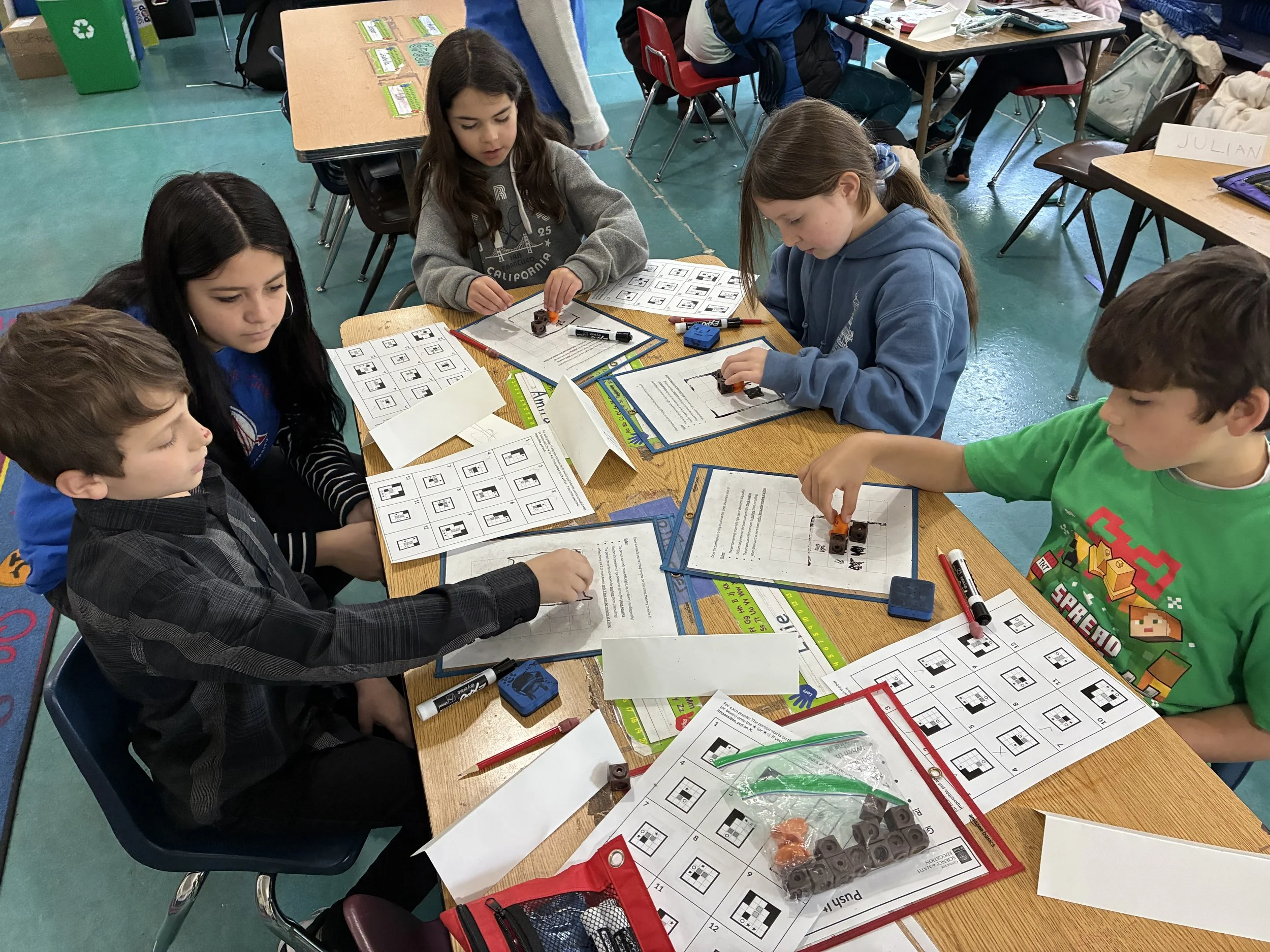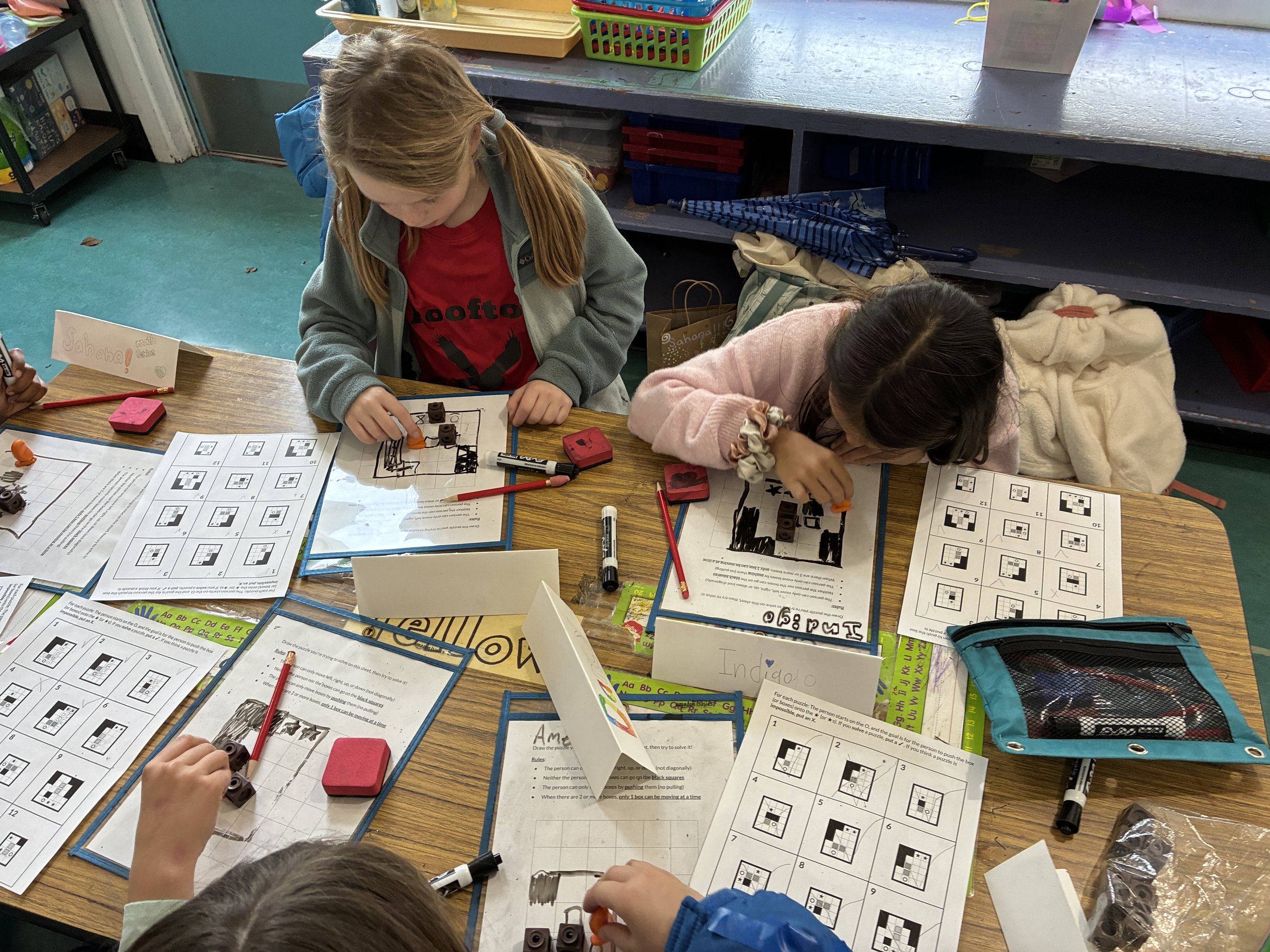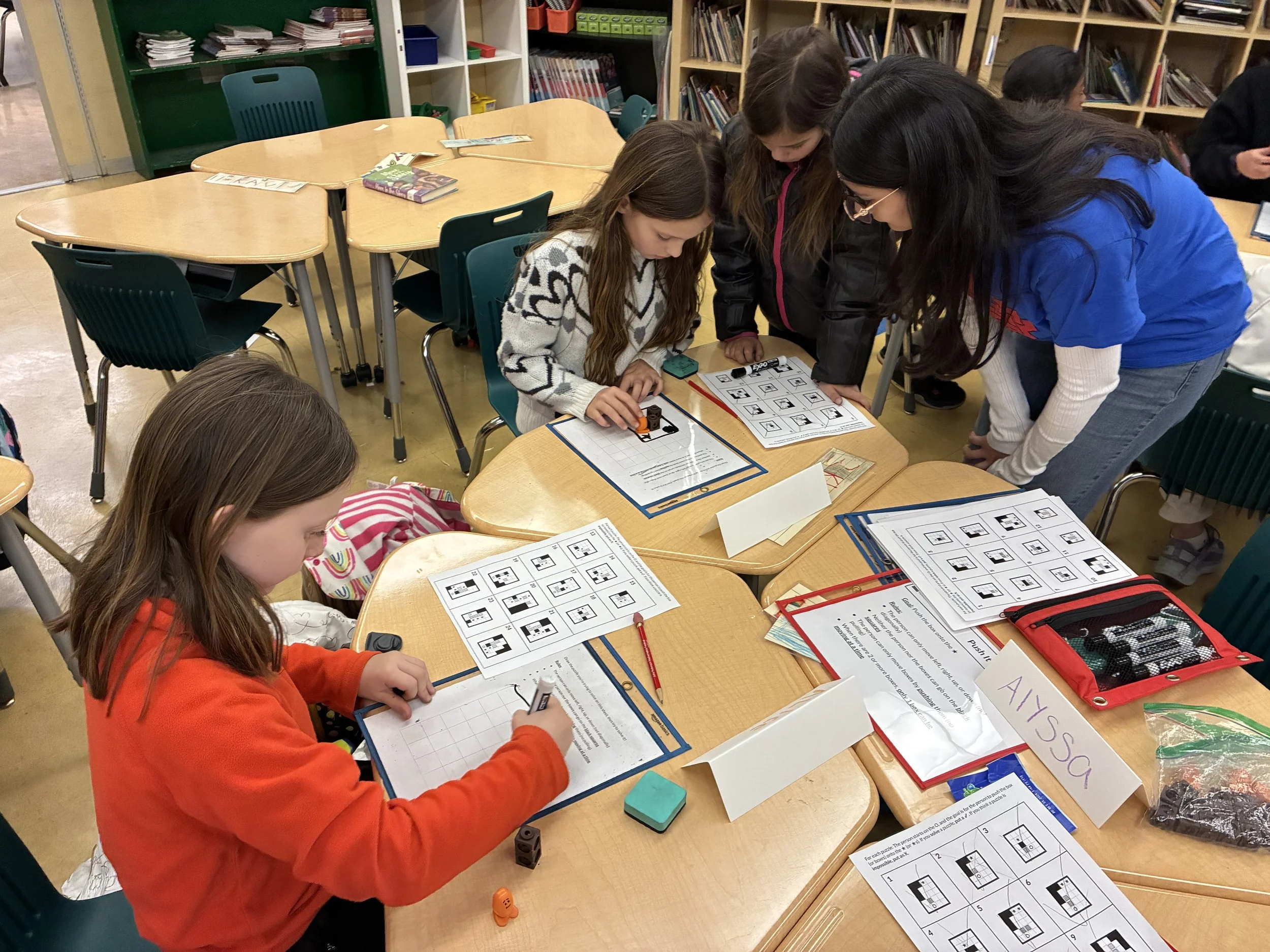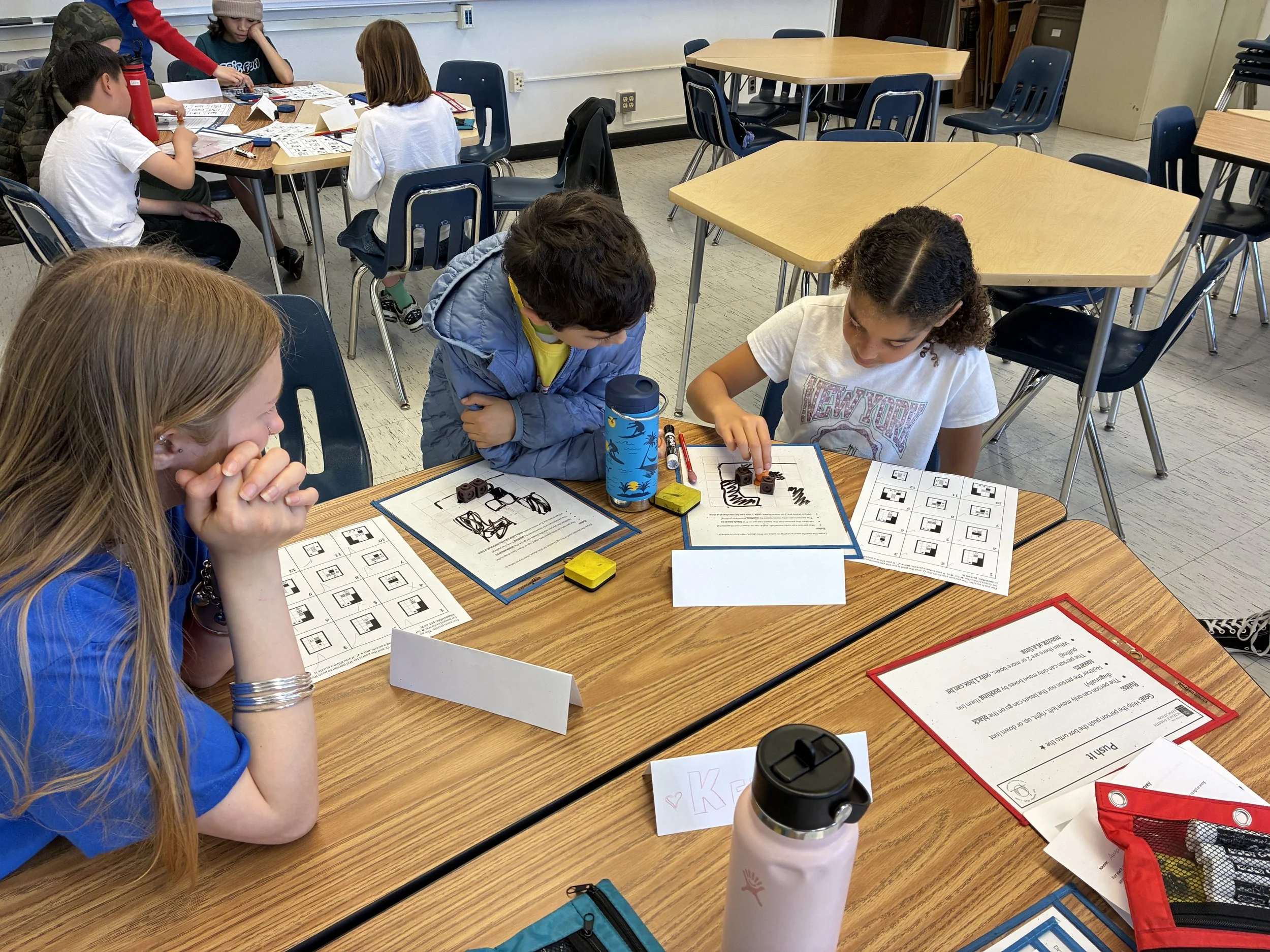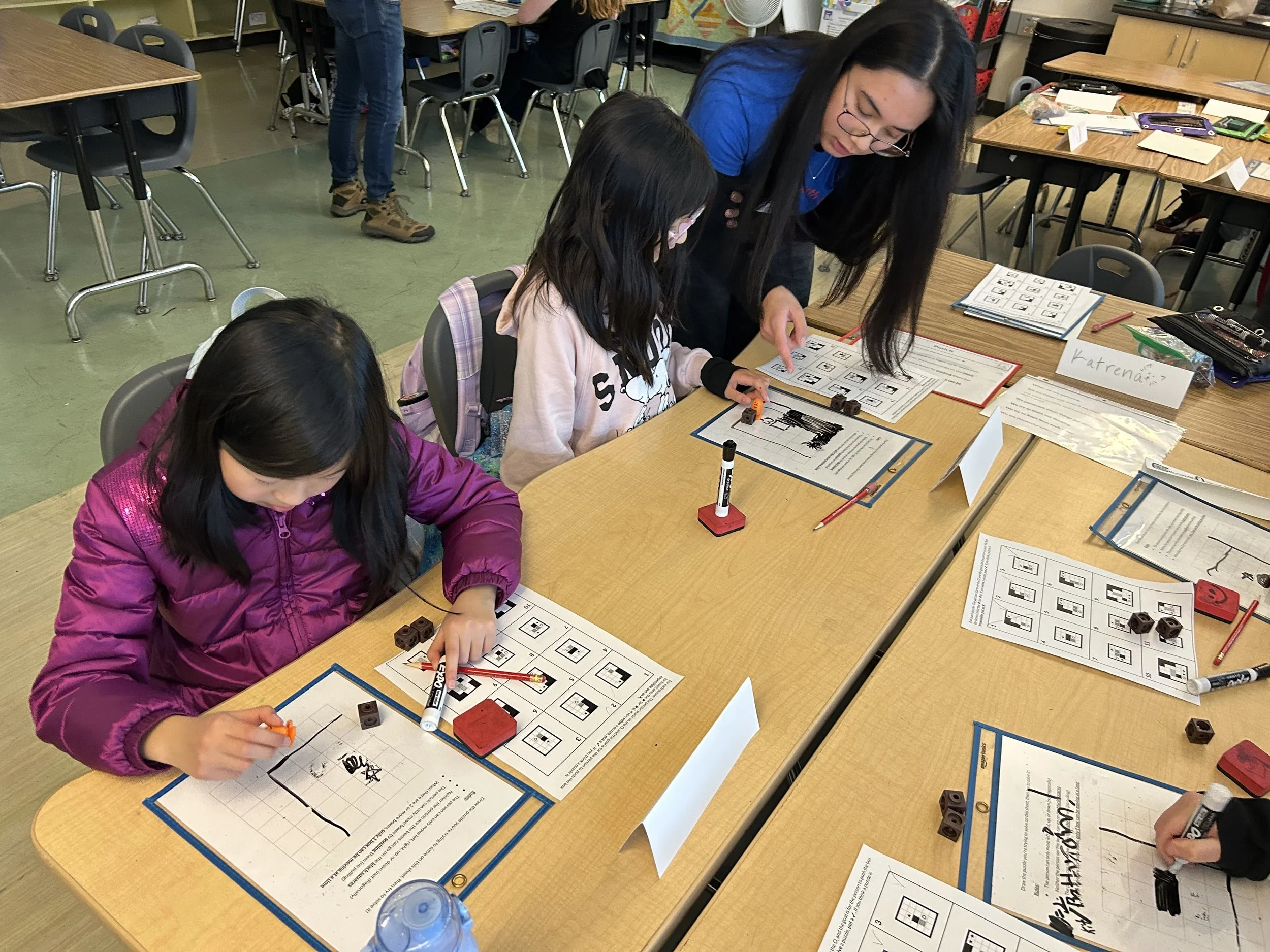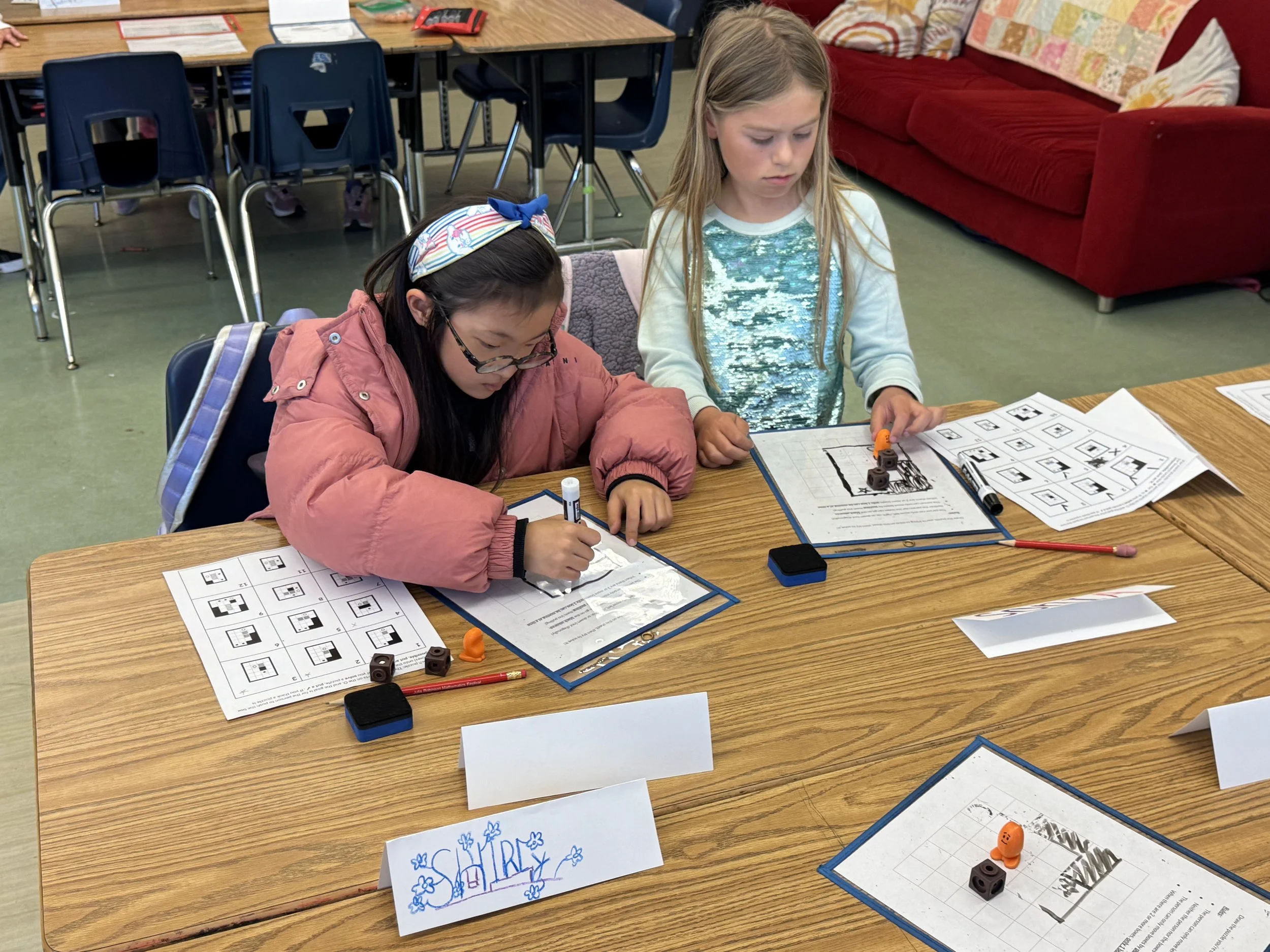
Push It
How it works
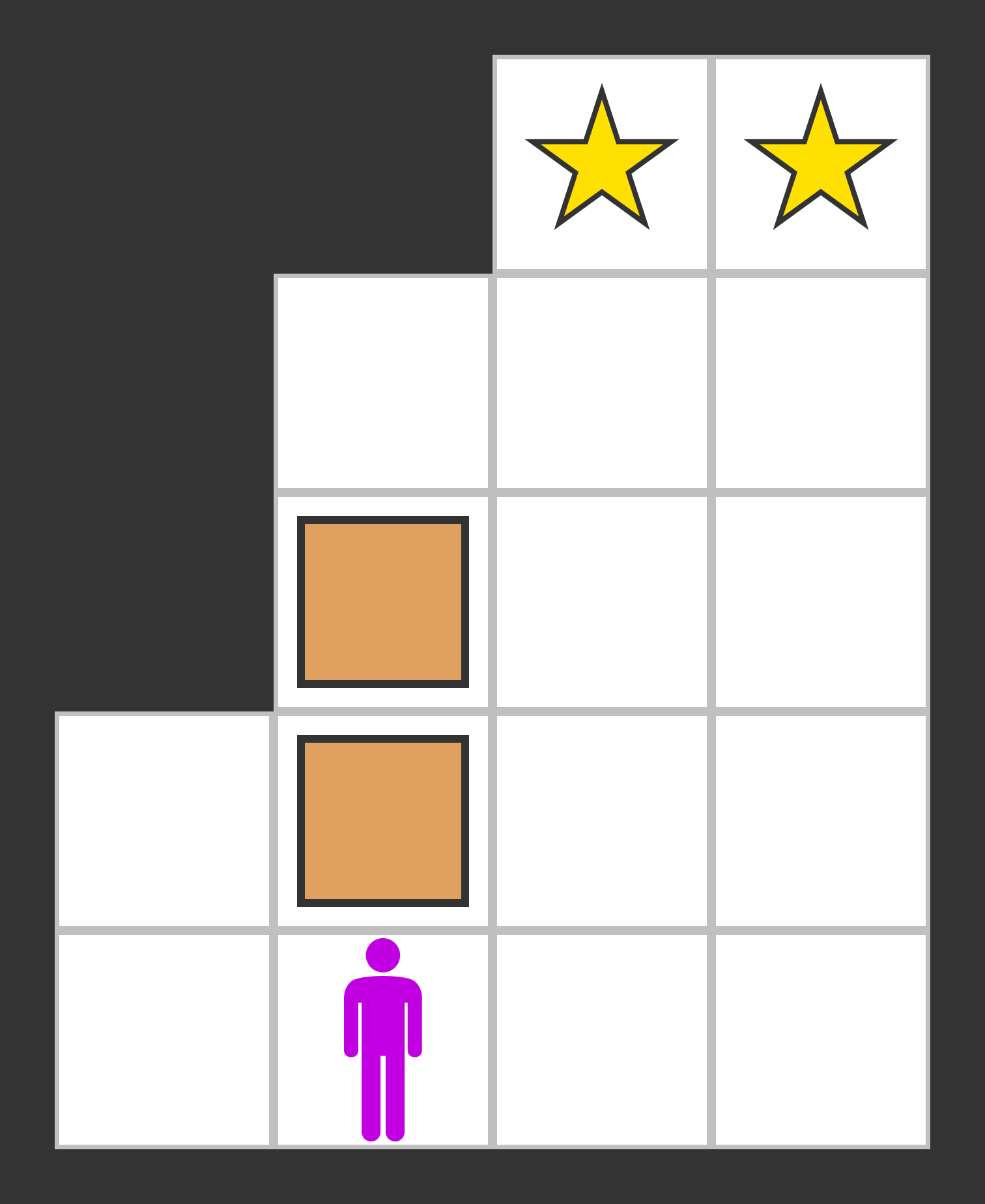
Imagine that we want to give instructions to a person to help them push a set of boxes into specific locations in a room (as pictured above).
When moving the boxes, there are some rules the person has to follow:
- The person can only move north, south, east or west — not diagonally.
- If there are any black squares, neither the person nor the boxes can go on the black squares.
- The person can only move the boxes by pushing them (no pulling).
- When there are 2 or more boxes, only 1 box can be moving at a time (so, in particular, the person can't push multiple boxes at once by pushing one into the other(s)).
Can you help the person push the boxes into the desired locations?
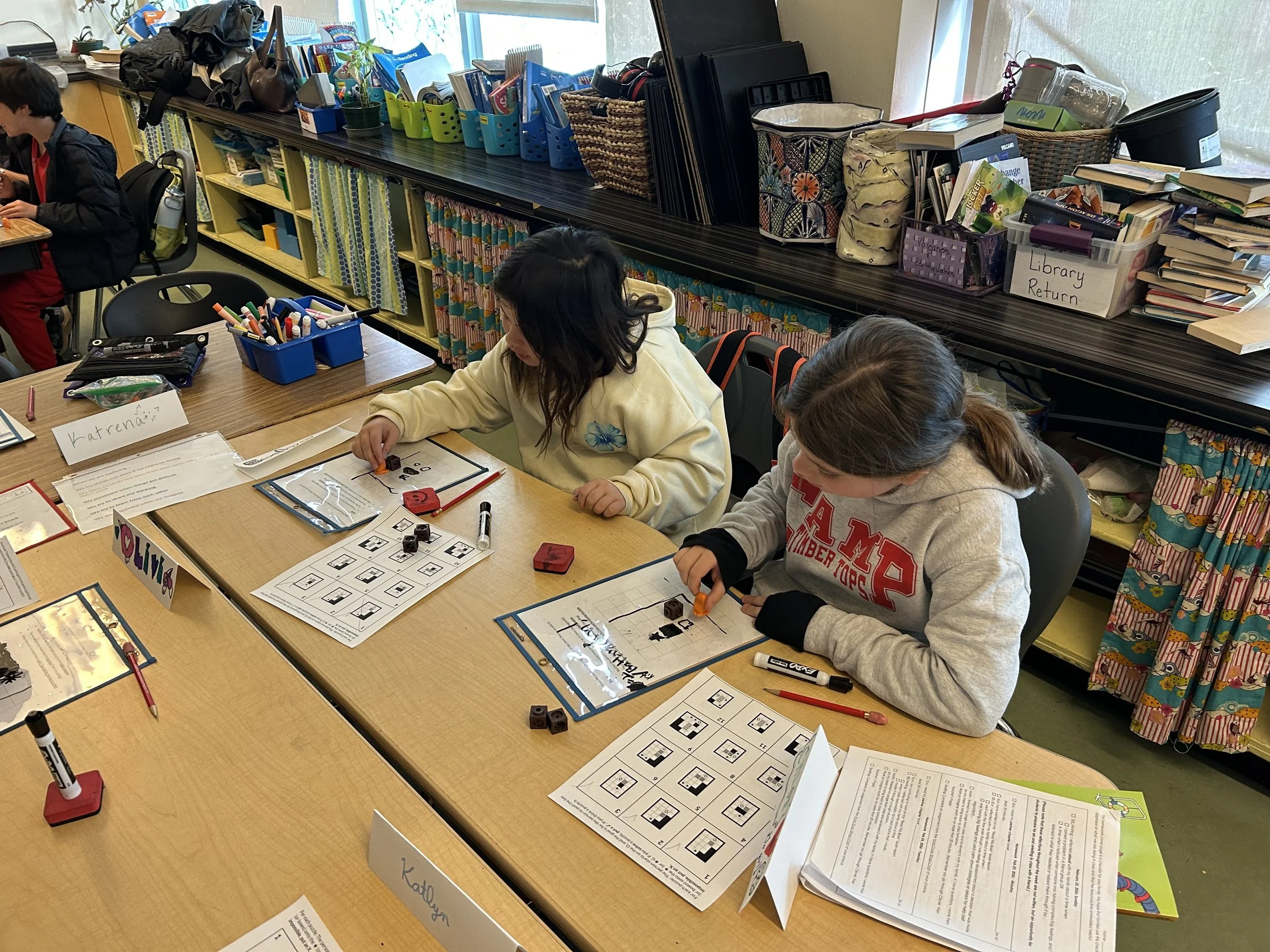
In this activity, students explore a variety of puzzles like the ones described above. Some of these puzzles are possible to solve, and some are impossible!
Why we like this activity
It’s fun! Students enjoy trying to solve the puzzles.
It helps students develop algorithmic reasoning.
It helps students develop spatial reasoning.
It requires students to engage in mathematical habits of mind:
Using logic and finding and using strategies when trying to solve the puzzles.
Using logic and understanding and explaining when trying to determine which puzzles are impossible.
It has a low floor and a high ceiling: Students can get started solving puzzles by trial and error, but more complex puzzles require more careful strategizing.